
Why GLP-1 Drugs Matter for Heart Health
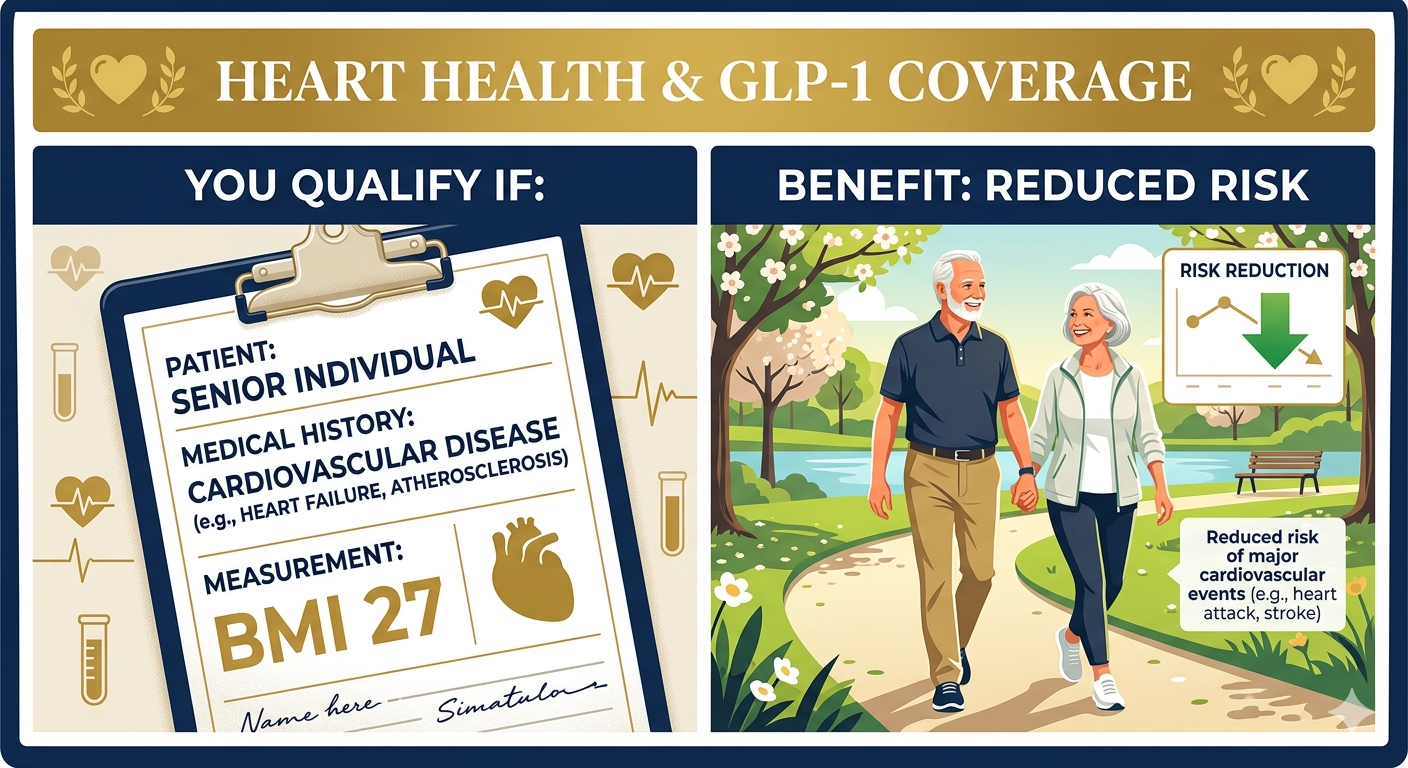
Originally developed for blood sugar control, GLP-1 receptor agonists have demonstrated significant benefits for cardiovascular health. Landmark clinical trials — most notably the LEADER trial (liraglutide) and the SUSTAIN-6 and SELECT trials (semaglutide) — showed that these medications reduce the risk of major adverse cardiovascular events (MACE), including heart attack, stroke, and cardiovascular death.
The SELECT trial was particularly significant because it studied semaglutide (the active ingredient in Wegovy) in people with obesity and established cardiovascular disease who did NOT have diabetes. The results showed a 20% reduction in MACE — a finding that helped pave the way for expanded Medicare coverage.
Who Qualifies Under the Cardiovascular Pathway?
Under Medicare's 2026 guidelines, GLP-1 coverage for cardiovascular indications applies to beneficiaries who meet all of the following criteria:
- Established cardiovascular disease (prior heart attack, stroke, or peripheral artery disease)
- Body mass index (BMI) of 27 or higher
- A valid prescription from a licensed physician or qualified provider
This threshold is notably lower than the 35 BMI cutoff for the general obesity pathway. That's intentional — it reflects the FDA-approved indication for semaglutide specifically in cardiovascular risk reduction.
Key distinction: You do not need to have diabetes to qualify for GLP-1 coverage under the cardiovascular pathway. A prior cardiac event and a BMI of 27 or above may be enough.
What Documentation Does Your Doctor Need to Provide?
Medicare Part D plans typically require prior authorization for GLP-1 medications. This means your doctor will need to submit clinical documentation that supports your eligibility. Here's what that often includes:
- A diagnosis code for established cardiovascular disease (e.g., ICD-10: I25.10 for coronary artery disease)
- A documented BMI reading of 27 or higher from a recent visit
- The specific GLP-1 drug being prescribed and the clinical rationale
- Any relevant lab work or cardiac history supporting cardiovascular risk
If your prior authorization is denied, you have the right to appeal. Your doctor can submit a letter of medical necessity, and a Medicare agent can help you navigate the process.
Which GLP-1 Drugs Are Most Commonly Covered for Cardiovascular Conditions?
Coverage varies by plan, but the drugs most frequently associated with the cardiovascular indication under Medicare Part D in 2026 include:
- Wegovy (semaglutide 2.4 mg) — FDA-approved to reduce cardiovascular risk in adults with obesity or overweight and established CVD
- Ozempic (semaglutide 0.5–2 mg) — covered for Type 2 diabetes with cardiovascular benefit documentation
- Victoza (liraglutide) — also carries a cardiovascular risk reduction indication for Type 2 diabetes patients
Not every Part D plan covers all of these drugs. It's important to check your plan's formulary and, if needed, request a formulary exception for your specific medication.
Medicare Advantage and Cardiovascular GLP-1 Coverage
If you're in a Medicare Advantage plan with drug coverage (MAPD), your plan must follow CMS guidelines but has flexibility in how it structures its formulary. Some plans may place GLP-1 drugs on Tier 4 or Tier 5 (specialty tier), meaning your copay could still be substantial even with coverage.
During the Annual Enrollment Period, a licensed Medicare agent can compare plans side by side — looking specifically at which tier each GLP-1 drug sits on and what your out-of-pocket costs would be. This can make a difference of hundreds of dollars per month.
Dual Eligibles and Low-Income Subsidy Beneficiaries
If you qualify for both Medicare and Medicaid (dual eligible) or receive the Low-Income Subsidy (LIS/Extra Help), your cost-sharing for covered GLP-1 drugs may be significantly reduced. In some cases, your copay may be just a few dollars per fill.
This is especially relevant for beneficiaries in Arizona who are enrolled in AHCCCS (Arizona's Medicaid program) as well as Medicare. A Medicare Savings Program or D-SNP (Dual Eligible Special Needs Plan) may provide access to additional benefits that complement your GLP-1 coverage.
📞 Need Help? We specialize in helping Arizona seniors with Medicare and dual eligibility navigate their coverage options. Call us for a free review — including GLP-1 coverage analysis.
Disclaimer: This article is for educational purposes only. Always consult your physician before making changes to your medication. Coverage details are subject to change and vary by plan.